

Health & Wellness
by Himanshu Garg
11 Views
Why I stopped believing eco-friendly has to cost more

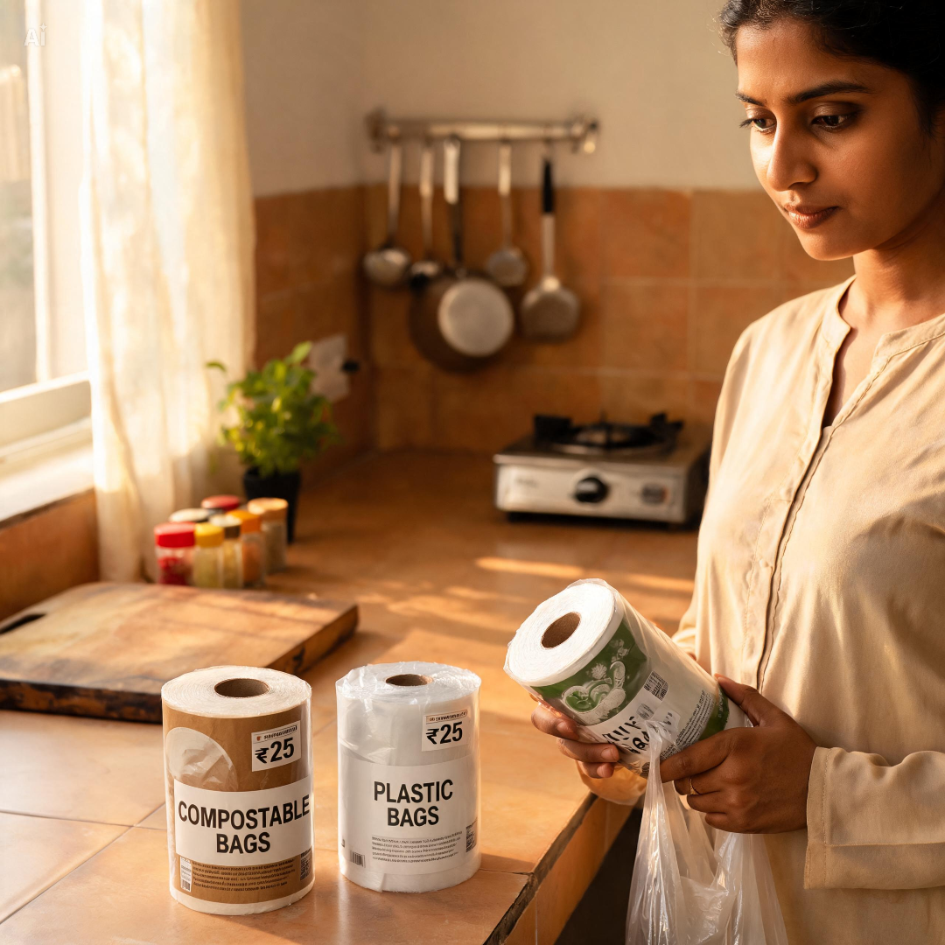
A few years back I was standing in an organic store in Delhi, holding a compostable garbage bag priced almost three times what I normally pay for a regular one at my local kirana shop. I put it back on the shelf. Not because I stopped caring about where my trash ends up. Because I have a monthly budget, like most Indian households do.
That moment is basically why CleanNOrganics exists.
For a long time, "sustainable" in India has quietly meant a certain kind of store, in a certain kind of neighbourhood, selling to a customer who does not check the price twice. Bamboo toothbrushes, organic cotton totes, plant based cleaners, they are real and they do help, but they tend to be priced for someone comfortable paying a premium without thinking about it. Sustainability that only the top slice of earners can afford does not really reduce the plastic in our rivers or the load on our landfills. It mostly makes a small group of people feel good about their shopping.
The intent is not the problem. Indians, by most measures, care more about this than people in far richer countries do. When Bain and Company surveyed more than 23,000 consumers across markets for its global sustainability report, India came out among the most worried, with 85 percent of respondents saying they were very or extremely concerned about the environment, ahead of the US, Germany and the UK. But the same report made an important point: a lot of people who say they care still find sustainable products too expensive to buy regularly. Concern is not the bottleneck. Price is.
I saw the same pattern in American Express's Trendex survey from 2022, and this is the part I keep coming back to. The Indian respondents in that survey were not an average cross section of the country. They were people with a household income of at least seventy thousand dollars a year who fly at least once annually, in other words, a genuinely well off group. Even inside that comfortable slice, 92 percent said they were willing to pay a premium for sustainable products, but 37 percent still named a better price as the thing that would get them to buy more of them. If price mattered that much to people who can clearly afford the premium, think about how much it matters to a family in Nagpur or Bhopal weighing the eco-friendly dish soap against one that costs forty rupees less.
That gap is where I think the real opportunity sits, and where this website has tried to build something different. A ten rupee difference on a bar of soap in Gurgaon barely registers. The same ten rupees, multiplied across a few crore households in Tier 2 and Tier 3 towns buying it every month, is the difference between sustainable products staying a boutique idea and becoming the default. That is the scale where environmental impact actually lives. Not in one wealthy pincode being extremely responsible, but in lakhs of ordinary kitchens quietly switching because the eco-friendly option stopped costing extra.
So that has been the working rule behind CleanNOrganics: source directly, cut out the markup that exists only to signal "premium," keep packaging simple instead of fancy, and treat a low price as a design requirement rather than something to apologise for. It is not always easy. Organic and biodegradable inputs genuinely cost more to produce than their synthetic equivalents, so somewhere in the chain somebody accepts a thinner margin. I would rather that be us than the customer buying one bag of compost at a time.
A compostable bag that only rich households buy has, in a practical sense, failed at its one job. If sustainable living does not reach the middle class kitchen, it has not actually gone anywhere.
Sources and further reading
American Express Trendex, India findings covered by The Quint — details on the 2022 survey, its methodology, and the income level of respondents.
Bain & Company global consumer sustainability survey, via ESG Today — concern levels by country and the affordability gap.